

A whole ecosystem lives inside your pet
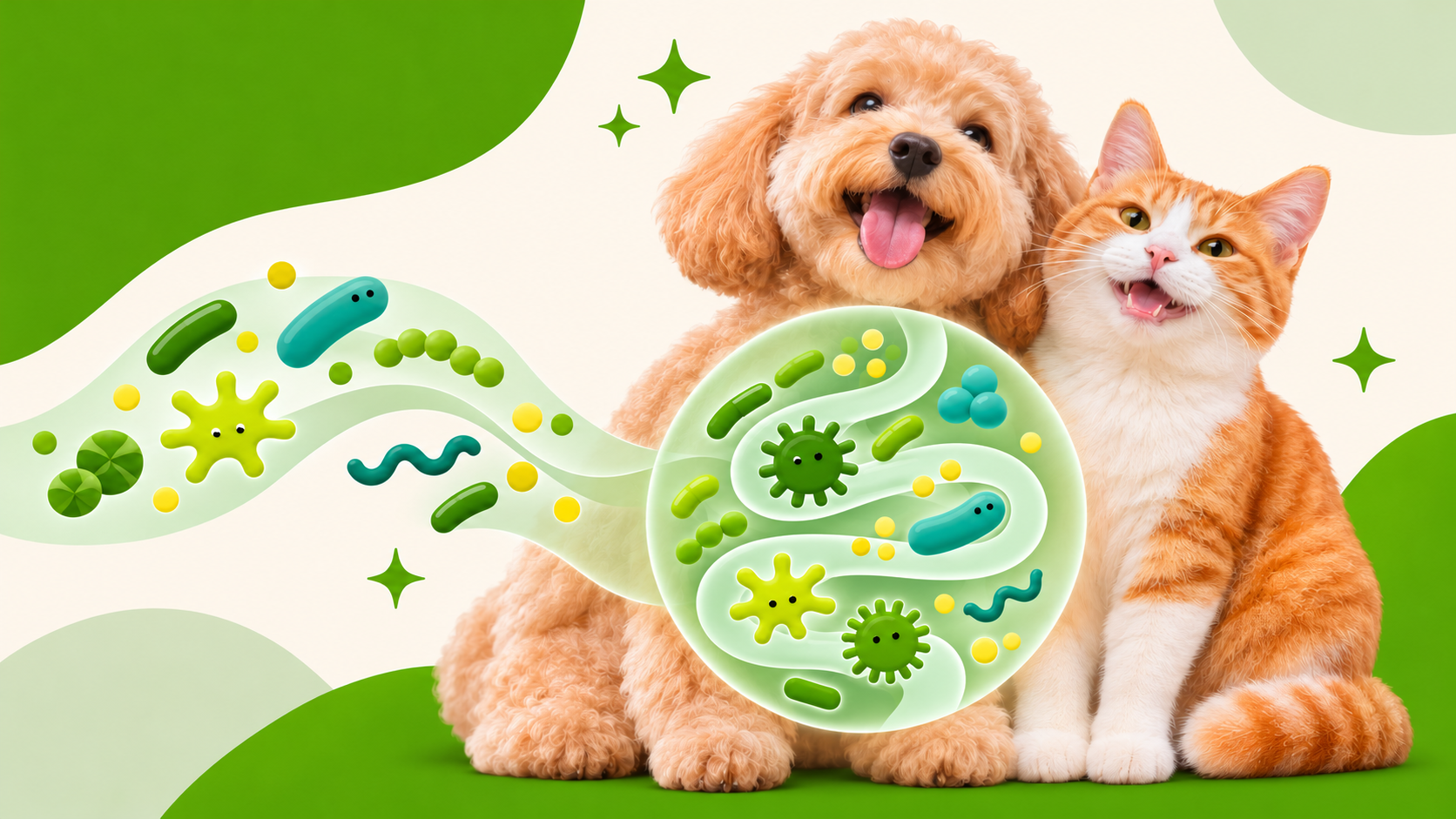
Every dog and cat carries billions of bacteria, fungi and other microbes in their gut, together called the "gut microbiome". They help digest food, make some nutrients, train the immune system, and are even linked to mood and behaviour.[1]
But scientists care less about how many bacteria there are, and more about how many kinds, and how evenly they are spread. That is what the diversity index measures.
The diversity index looks at two things
Picture a tropical rainforest next to a lawn planted with a single type of grass. The rainforest has so many species that if the weather changes or pests arrive, others can step in. On the lawn, one disease can turn the whole patch brown. The gut works the same way.
A diversity index (the Shannon index is a common one) combines two ideas:
- Richness: how many different kinds of bacteria live in the gut. More kinds means a higher number.
- Evenness: whether those kinds are present in similar amounts. If one or two types take over, evenness drops, even when there are many kinds.
When both are high, the gut ecosystem is usually richer and more resilient.
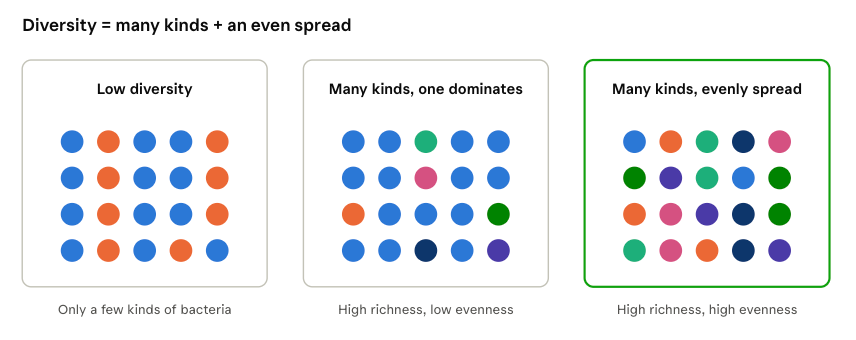
Each dot is a bacterium and each colour is a type: only the panel on the right is both "many kinds" and "evenly spread".
Why diversity matters
Studies generally find that animals with higher gut diversity have a more stable ecosystem that copes better with diet changes, stress and new environments. Low diversity is sometimes linked to tummy troubles, long courses of antibiotics, or a very limited diet.[1][2]
One important caveat: the diversity index is a reference point, not a diagnosis. A high score does not guarantee good health, and a low score does not mean your pet is ill. A single test is a snapshot of one day, and should be read alongside your pet's age, diet, stools and your vet's advice.
What affects gut diversity?
- Diet: the variety of ingredients, protein quality and dietary fibre all shape which bacteria can grow. Fermentable fibre is "food" for many beneficial bacteria.[3]
- Age: puppies, kittens and senior pets usually have a different gut ecosystem from adults.[4]
- Medication: antibiotics kill harmful bacteria, but can reduce beneficial ones too.[2]
- Environment and lifestyle: exercise, where your pet lives and contact with other animals can all play a part.
- Sudden food changes: switching too quickly gives gut bacteria no time to adjust, which can lead to soft stools.
Why do dogs eat prebiotics and probiotics?
The names sound alike, but they do different jobs: one is the "food", the other is the "good bacteria" themselves.[5][6]
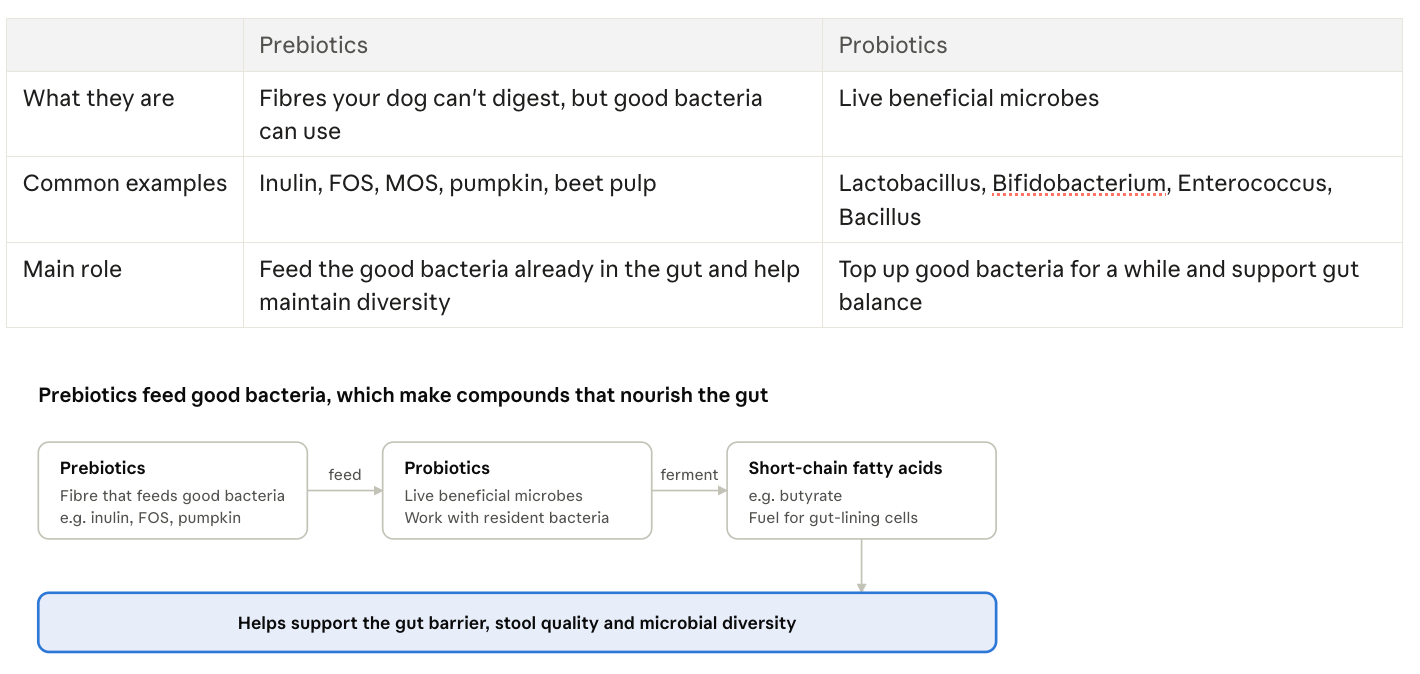
When good bacteria ferment prebiotics, they produce short-chain fatty acids, an important energy source for the cells lining the gut.
When can they help most?
- During a food change: gut bacteria need time to adapt.
- After antibiotics: good bacteria may have been reduced too.
- In stressful times: moving house, boarding or long trips.
- On a limited diet: with little fibre, good bacteria have little to eat.
Good to know before you start:
- Effects depend on the probiotic strain, and most probiotics are "visitors" that fade after you stop giving them.[6][7]
- Too much prebiotic at once can cause gas or soft stools, so start small.
- Choose products made for pets: some human supplements contain xylitol, which is toxic to dogs.
- If your pet is on treatment or medication, check with your vet first.
What can pet parents do?
- Change food gradually: a common guideline is to increase the new food over 7 to 10 days.
- Watch the poop: shape, colour and frequency are the easiest daily signs of gut health.
- Focus on ingredient quality and fibre: choose easily digestible, high-quality protein with a suitable amount of dietary fibre.
- Don't self-medicate: check with your vet before giving antibiotics or probiotics.
- See a vet for lasting symptoms: such as ongoing diarrhoea, vomiting, loss of appetite or weight loss.
The Petsona view: no two guts are the same
Just as no two pets are the same, every pet's gut ecosystem is unique. That's why Petsona believes in personalised nutrition: we adjust the mix of protein, starch, vegetables and fibre for each pet based on age, weight, activity, health and feedback from pet parents, and use low-temperature dehydration to keep the natural goodness of human-grade ingredients.
We're also working with local researchers to better understand the gut health of Hong Kong's pets, so that every bowl can be backed by more science in the future.
References
- Pilla R, Suchodolski JS. (2020). The Role of the Canine Gut Microbiome and Metabolome in Health and Gastrointestinal Disease. Frontiers in Veterinary Science, 6:498. Link
- Pilla R, et al. (2020). Effects of metronidazole on the fecal microbiome and metabolome in healthy dogs. Journal of Veterinary Internal Medicine, 34(5). Link
- Middelbos IS, et al. (2010). Phylogenetic characterization of fecal microbial communities of dogs fed diets with or without supplemental dietary fiber using 454 pyrosequencing. PLoS ONE, 5(3). Link
- Mizukami K, et al. (2019). Age-related analysis of the gut microbiome in a purebred dog colony. FEMS Microbiology Letters, 366(8). Link
- Gibson GR, et al. (2017). ISAPP consensus statement on the definition and scope of prebiotics. Nature Reviews Gastroenterology & Hepatology, 14:491–502. Link
- Hill C, et al. (2014). ISAPP consensus statement on the scope and appropriate use of the term probiotic. Nature Reviews Gastroenterology & Hepatology, 11:506–514. Link
- Shmalberg J, et al. (2019). A Randomized Double Blinded Placebo-Controlled Clinical Trial of a Probiotic or Metronidazole for Acute Canine Diarrhea. Frontiers in Veterinary Science, 6:163. Link
This article is for general information only and does not replace diagnosis or treatment advice from a vet. If your pet has any health concerns, please consult a registered veterinarian.


